
Components That Define Staircase Functionality and Style
Stairparts in Quad Cities for handrails, treads, newels, and balusters that match your architectural design
Staircases require precisely fitted components that provide safe, code-compliant structure while contributing to the overall design aesthetic of residential and commercial spaces. Custom Wood Creations offers both stock stairparts for faster availability and fully custom fabrication for projects requiring specific profiles, materials, or dimensions that standard offerings cannot accommodate. Handrails, treads, risers, newels, and balusters all work together structurally and visually, so component selection affects both safety and how the staircase integrates with surrounding architecture in Quad Cities properties.
Stock stairparts provide consistent quality with shorter lead times when your design follows standard dimensions and common profile shapes. Custom fabrication becomes necessary when matching existing staircase details in older homes, creating statement staircases with unique profiles or materials, or meeting specific architectural requirements that stock components cannot satisfy. Each element—from tread thickness to baluster spacing to handrail profile—must meet building codes while also reflecting your design intent.
Schedule a staircase consultation to review component options and discuss whether stock or custom stairparts fit your project requirements.
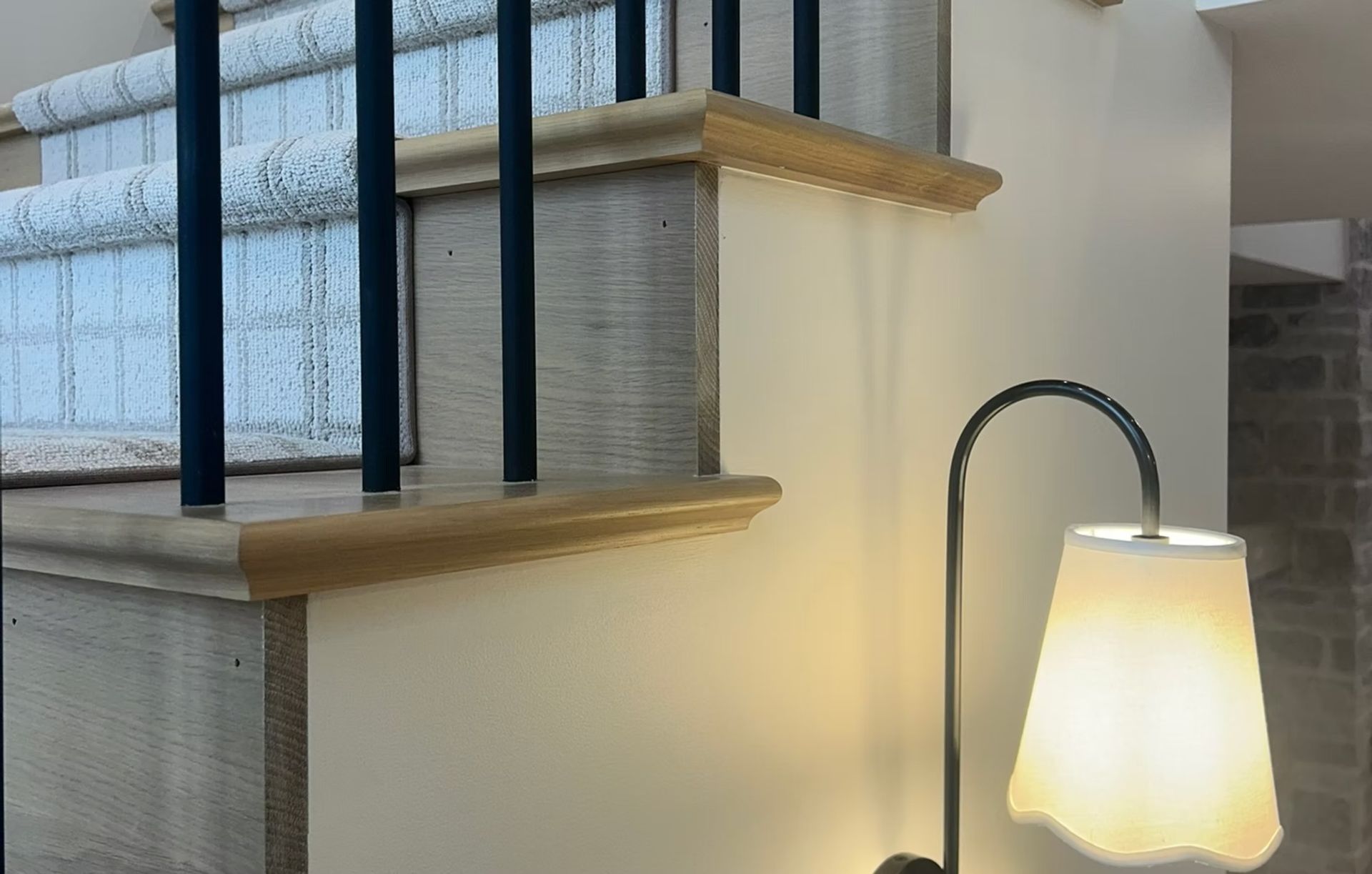
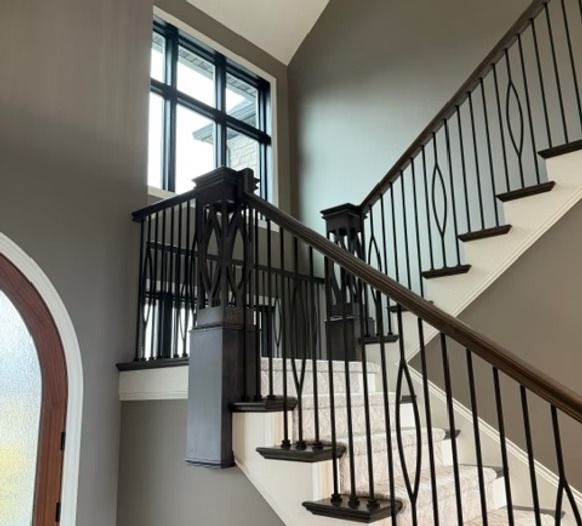
The Difference Between Stock and Custom Stairparts
Stock components arrive pre-milled in standard profiles, lengths, and wood species, allowing for consistent appearance and faster project timelines when dimensions align with common residential or commercial staircase configurations. Custom fabrication involves creating components to exact specifications, which matters when replicating historic profiles, building unusually wide or narrow staircases, or using materials that require specialized milling. Newel posts, for example, come in standard turned profiles for stock options, while custom newels can incorporate unique carvings, non-standard heights, or specialized mounting details.
Once installation completes, you notice handrails sit at comfortable, code-compliant heights with smooth transitions at turns and landings. Treads remain secure without squeaking, with consistent overhang beyond risers. Balusters space evenly according to safety codes, preventing gaps that could create hazards. All wood tones and grain patterns coordinate because components come from matched material runs rather than mixed sources.
Material choice also affects performance and maintenance. Hardwoods like oak or maple provide durability under heavy foot traffic, while softer woods work well for decorative elements with less contact. Finish selection determines how stairparts handle wear, moisture exposure in basements or outdoor access areas, and long-term maintenance requirements. Baluster design ranges from simple square profiles to ornate turned or wrought iron options, depending on whether your project emphasizes traditional or contemporary design.
What Clients Ask About Staircase Components
Questions about stairparts typically focus on how components work together structurally, what factors affect durability and safety, and when custom fabrication provides value over stock options.
What determines whether I need custom versus stock stairparts?
If your staircase follows standard rise and run dimensions, uses common wood species, and fits within typical residential or light commercial profiles, stock components provide quality results with faster availability. Custom fabrication matters when matching existing historic details, building staircases with unusual dimensions, or creating design features that standard profiles cannot achieve.
How does baluster spacing affect both safety and appearance?
Building codes typically require baluster spacing that prevents a four-inch sphere from passing through, ensuring child safety while also affecting visual density along the staircase. Closer spacing creates a more enclosed feel, while wider spacing within code limits maintains openness.
What makes handrail profile selection important?
Handrail profiles must provide comfortable grip diameter, smooth transitions at turns, and secure mounting that supports body weight during use. Profile shape also affects visual style—rounded profiles feel more traditional, while square or rectangular profiles suit contemporary designs common in modern Quad Cities builds.
When should tread material differ from surrounding flooring?
Treads endure concentrated wear from foot traffic and require durable hardwoods even when adjacent flooring uses softer species. Coordinating wood tones while selecting structurally appropriate materials ensures staircases perform well long-term without excessive wear or maintenance.
How does custom fabrication help when adding onto existing staircases?
Matching existing profiles, wood species, and finish characteristics requires milling new components to replicate original dimensions and details, which stock options rarely accommodate. Custom fabrication ensures additions blend seamlessly with older staircase elements rather than standing out as obviously newer work.
Custom Wood Creations provides both stock and custom stairparts for residential and commercial projects, handling component selection, fabrication, and coordination with installation schedules. Contact us to review your staircase design and explore which component options deliver the functionality and appearance your project requires.